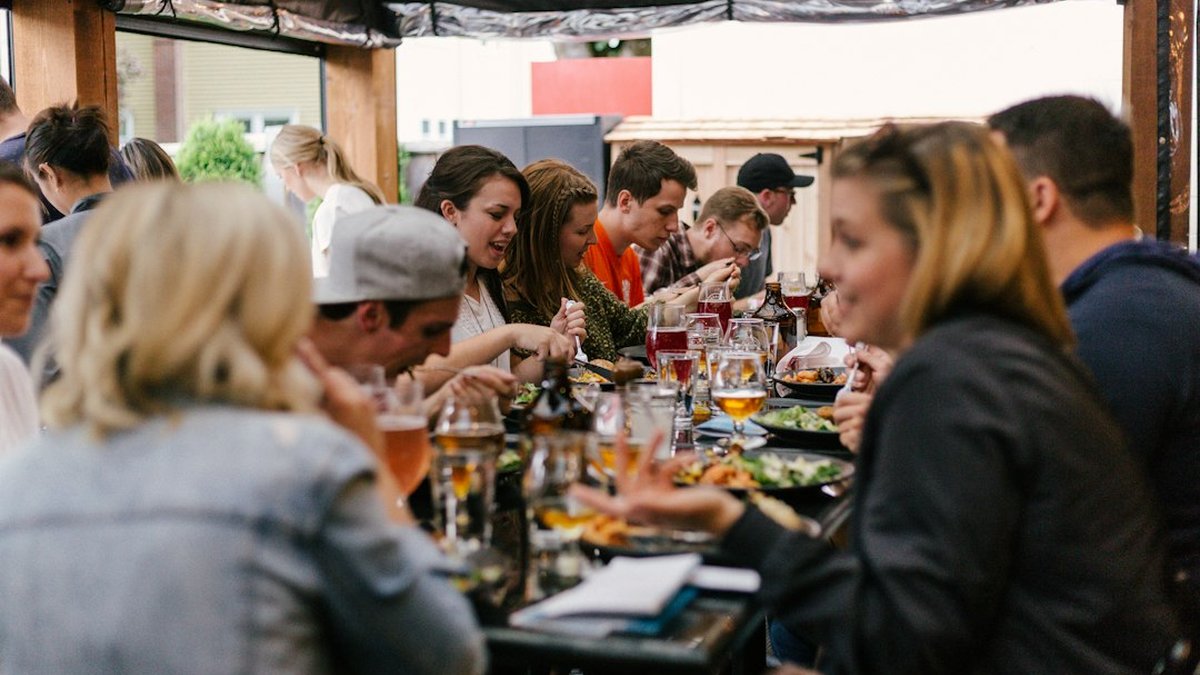
Most farm and restaurant partnerships are agreed over lunch and written down in an email, and that is broadly the right order. When South Central Minnesota's Local Foods Month matched growers with kitchens in 2026, 8 farms supplied 6 restaurants, and one of them, The Wooden Spoon, bought from four farms at once. That ratio is the point. A restaurant that sources locally is not forming one partnership. It is managing a small portfolio of them, and each one needs its terms settled before the first missed delivery.
The rooms where this starts are modest. Southwest Colorado's HomeGrown Food Retreat, held on April 8, 2017 at the ELHI Community Center in Ignacio, asked a $20 suggested donation and provided coffee and lunch. Its program put a chef, a river-restoration gardener and an explainer of the Cottage Foods Act on the same bill. The keynote speaker, Chef M. Karlos Baca, had founded Taste of Native Cuisine, an Indigenous chef cooperative. The archive records no contracts signed that day, and it would be odd if it did. Signing contracts is not what these gatherings are for.
What the room does that a cold email cannot
These gatherings teach each side the other's constraints before anyone negotiates. Cornell Cooperative Extension's Fields to Forks conference in April 2026 ran two tracks. Chefs studied seasonal menu planning. Farmers covered wholesale readiness, pricing, packing standards and delivery logistics. Both left with seasonality charts and purchasing templates. Vermont's state-run series goes further: nine events that pair farm tours with visits to restaurants that already source locally.
A farmer who has seen a chef's walk-in cooler writes a better offer than one working from a cold pitch. The relationship is also the part that lasts. Chef Andrew Hunter has attended Niman Ranch's farmer weekend for 19 years.
Six terms to write down
Most of these relationships need no formal contract. Local Line considers a short email exchange sufficient, provided it confirms the following:
-
Order minimum
Local Line put typical minimums at $75 to $150, which is enough to justify a delivery run.
-
Cutoff times and delivery schedule
Seasonality belongs here too: state which weeks each crop is expected and which weeks it is not.
-
Price list
Use account-specific lists where volume varies. One farm guide gives a sample discount of 10% for orders of 51 to 150 lb and 15% above that.
-
Payment terms
Net 30 is the norm cited by both farm guides.
-
Substitutions
Say what happens when a crop fails, and who decides what replaces it.
-
Cancellation and termination
A 30-day notice provision is the usual recommendation.
The sources are silent on co-branding norms, such as naming the farm on a menu. The honest advice is to agree that in the same email. A jointly branded product is a different matter. It raises the question of revenue share or equity, and it deserves a proper agreement.
The case for skipping the handshake
The strongest objection is that direct relationships do not scale. One industry analysis estimates that local sourcing adds 25 to 35% in delivery-coordination costs. Madison's Foodshed Partnership, a $6 million food hub that includes a $2.6 million USDA grant, exists precisely because farmers struggle to connect supply with demand. USDA keeps a Food Hub Directory for the same reason. All of this is true, and a restaurant ordering at volume may well be better served by a hub.
It does not change the method, however. A hub is simply one more supplier with minimums, cutoffs and payment terms, and the same six lines apply to it. The meeting is where trust is built, and the email is what protects both sides when that trust is tested. The email should be sent within a week of the meeting, while both parties still remember what they agreed.
Comments
No comments yet. Be the first to comment!
Leave a Comment